
Booking gigs shouldn’t feel like guesswork, but for many independent musicians, it still does. Emails get sent, replies take forever (or never come), and then show night arrives. You’re hoping the room fits your sound, the PA works, and the crowd isn’t a total mismatch. Fingers crossed. In my view, that kind of uncertainty usually drains more energy than people admit, especially when it sits on top of a dozen other band tasks that already need attention. That’s the problem the new venue intelligence feature is meant to fix. No mystery pitch here. The goal is to replace crossed fingers with clearer expectations, which is often what bands actually want. Knowing what you’re walking into can calm a lot of nerves before the van is even packed.
Instead of just a basic venue page, this feature gives practical gig info. You can see who usually shows up, what the crowd is like, and which genres tend to work well there. That last part can make a real difference in the right situation. It helps bands plan smarter shows and make better performance choices. Less guessing, more confidence most of the time.
For artists handling their own gigs, rehearsals, and band operations, this can change how shows get planned. It helps with better venue choices and stronger setlists, and it can prevent costly mistakes like booking the wrong room on the wrong night. It also doesn’t add extra work. The venue intelligence feature fits naturally into intelligent venue management inside BandMGT and becomes part of an existing workflow, which matters when schedules are already packed.
Why Venue Intelligence Matters More Than Ever
Live music often feels more crowded than it used to, and most people can tell. Venues feel that pressure too. With fewer open dates, artists compete harder for space, and that stress shows up fast in careful booking choices and packed calendars. Many independent rooms are simply trying to stay afloat, so they book cautiously and avoid risks when they can. Every night counts, and weekends usually matter even more.
That situation puts bands in a tough position. Showing you belong on a stage is now something you’re expected to do again and again, not just once. Often, you’re asked to prove it without clear evidence, which helps explain why the process feels harder, and more frustrating, than it should.
This is where venue intelligence starts to make a difference. The interesting part isn’t the data by itself, but what it shows when you pay attention. Instead of guessing, looking at past shows can point to which genres bring people out on weeknights, or what ticket prices tend to work in that room. You start to see what actually gets people through the door at a specific venue, on a specific night, and plan your show to fit that crowd. Most of the time, that works better than pushing something that doesn’t connect.
Here are a few real pressures musicians often face today:
- Venues prefer acts that fit their audience, sometimes very narrowly
- Booking calendars fill months ahead, often before new music drops
- Touring costs keep climbing, especially travel and lodging
- One bad gig choice can drain money and momentum
Planning with data has quietly become part of booking smarter. Skipping it often means falling behind.
Sales and marketing teams rely heavily on customer data and insights to target their efforts effectively. Location intelligence can provide valuable information about customer demographics, preferences, and behaviors, allowing businesses to tailor their marketing campaigns and sales strategies.
— Research Analyst Team, Precedence Research
The same idea applies to bands. When you understand a venue and the people who actually show up there, things usually get easier in practical ways, like fewer wasted drives and better nights overall.
For more context, related band tools are covered in CRM for Bands: Mastering Venue Management in 2025.
Additionally, musicians can explore Smart Song Analytics to understand how audience preferences align with the venue intelligence feature insights.
What the Venue Intelligence Feature Actually Gives You
Let’s be clear about what this feature is, and what it isn’t, still no hype. It goes past an address or a single capacity number. It shows how the venue usually runs gigs. The venue intelligence feature gives insight you can use to plan shows better, and to choose bookings that actually fit.
Crowd and Demographic Insight
Often, the energy a night needs shows up early. From there, it’s easier to judge the pace, and most nights that clicks fast. You can spot the main crowd type and age range at a venue without much effort, since it’s clear. For example, a place might draw adults 20 to 45 who come for late-night dancing and live music. That context helps explain when a longer set works and when the room wakes up.
Genre Alignment
Venue intelligence shows which genres show up most, and that pattern usually matters. It also gives a quick sense of which sounds have worked well lately with that crowd. Those signs help. When a venue often books rock, pop, dance, and cover bands, that’s a strong signal for you, less guessing about fit.
Demand and Event Pattern Insight
You’ll usually see which events bring people in, how nights act, and where pitching works best (it’s often obvious). It’s short and clear. Live bands often build loyal regulars, I think. DJ nights run late. Karaoke, chaotic but fun (you know it). Open decks rotate fast.
Load-In and Logistics Intelligence
No stress, it helps. Small details matter: parking access and busy traffic windows, especially near town center spots, usually shape your load-in planning and timing overall for you.
Performance Strategy Recommendations
What comes through is advice on reading the room, crowd energy and pacing, in ways you can use right away. It’s practical guidance, not theory. On some nights, that means starting with more energy from the first song (you’ll feel it), or planning a longer set that runs late, shaped by how the venue works.
A Real Example: Planning Smarter With Venue Intelligence
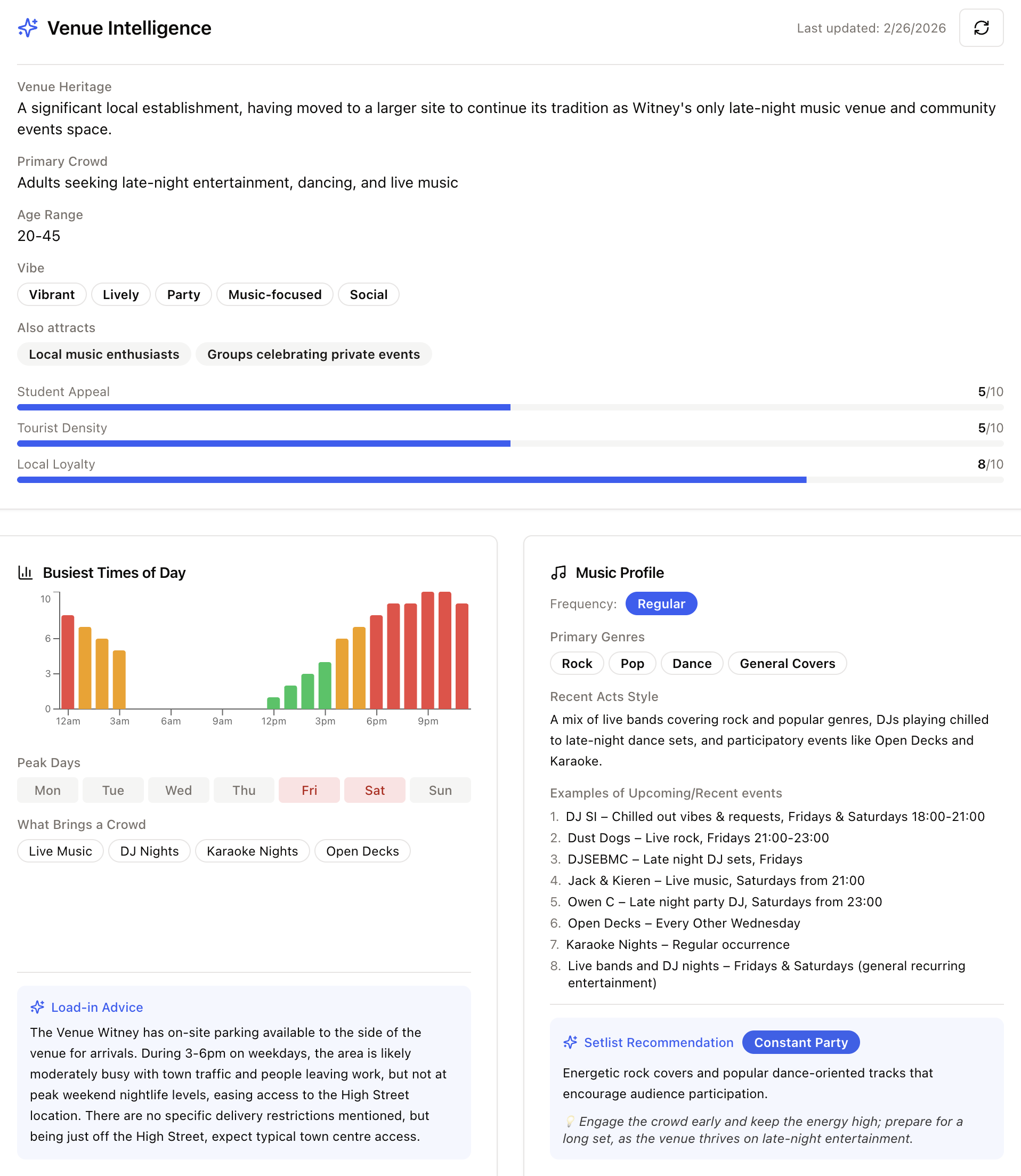
Late nights define this kind of room, and that’s what to know. Picture a venue booked for a 20 to 45 crowd, loud and party-focused as soon as people walk in, with no slow buildup.
The busiest stretch runs from late evening into early morning. Rock bands lead the sound, with DJs on some nights and karaoke mixed in, creating energy. Venue intelligence shows local loyalty and an energetic room, so you get context upfront and can plan better.
Instead of a mixed bag, the plan is a party setlist, and that usually works better. It uses rock covers mixed with dance-friendly songs, plus a few crowd moments (you know the vibe). By midnight, chilled acoustic tracks often fall flat, so keeping energy high early usually pays off.
Better Timing and Flow
Since busy venues often run late, you can stretch the set longer and save your best songs for peak hours when the crowd energy is highest.
Logistics Feel Calmer
That relaxed arrival stands out, the rush usually fades when you know when traffic gets busy and where to park, which often helps more than you expect. This shows the real usefulness of venue analytics features (used often), all coming from one venue profile. For bands building better planning habits, this fits ideas in Band organisation and management for New Year success, like simply knowing where to park.
How Venue Intelligence Supports Intelligent Venue Management
Venue intelligence works best when it’s part of everyday intelligent venue management, not something that lives only in planning docs. It’s usually practical, not theoretical, especially when teams use it show after show.
The real value shows up when venue insight is mixed with gig history and performance analytics, like setlists or repeat booking data. Patterns often appear after just a few shows, and that’s when the data starts to matter in real ways.
Those patterns help answer real questions. Which venues fit a specific sound, and where does the crowd connect fastest? Which rooms are worth rebooking next quarter, based on what actually happened on the ground?
Venue insights can help before and after you’re booked, shaping timelines and follow‑ups, so you’re likely to land gigs that fit you better.
Smarter Pitches
Knowing a venue runs rock covers on Fridays and late‑night DJs on Saturdays usually helps promoters say yes. It means a pitch matches the night better, with less guesswork, honestly, and the whole ask feels simpler, I think.
Better First Impressions
Preparation often builds trust and repeat bookings, honestly. Knowing the venue’s crowd and flow helps staff notice the details; it pays off in small, real ways.
Fewer Costly Mistakes
Travel and time add up quickly, especially gas and load-ins, and wear is real. Poor fits often mean lost money, while venue info cuts risk of booking rooms that don’t fit a band’s size, sound, or layout.
That’s why many musicians compare tools before they commit; there’s no rush. If you’re weighing options, we covered this in BandMGT Vs Stage Portal, pointing to where fit and logistics matter.
Moreover, you can read more about how analytics tools complement the venue intelligence feature in Performance Analytics for Bands.
Why Venue Intelligence Belongs in the Pro Plan
For the bands it’s made for, the value is usually clear. One smarter gig choice can often pay for months of Pro access, simple math, and hard to argue with. That’s why the more advanced aspects of venue intelligence sits in the Pro plan and appears early, during booking and planning, not after the fact, when it wouldn’t help much.
Venue intelligence works best when you use it often and across many venues, different rooms, different nights, which is pretty common.
Pro users are usually bands who:
- Play shows regularly
- Tour across regions
- Handle their own bookings
- Care about how their performances land in a room
It also saves time, lowers stress, and shows often go better, fewer surprises, smoother nights. That tends to matter once you’re on stage.
Putting Gig Intelligence to Work
What makes the new venue intelligence feature interesting is the respect behind it. Respect for your time, for the music you’ve spent years shaping, and for the real work it takes to run a band. That kind of respect often shows up in small, practical ways that make things easier.
Instead of dumping raw venue data on you, it turns it into insight you can actually use. You can usually see how your sound fits a specific room, venue size, typical crowd vibe, and make smarter calls without overthinking it. It helps you compare venues, plan logistics, and spot patterns, all without extra tabs or extra hassle.
If you’re serious about live performance, I think it’s worth using now, not someday. Why wait?
You’ll likely find it most useful when starting with upcoming gigs. Crowd size and vibe shape decisions more than people expect, so tweaking your setlist or arrival time often pays off. Walk in prepared, feel the difference, and be ready when the lights come up.