
TLDR; The article reviews four band management tools for working musicians: BandMGT, SetBook, Back On Stage, and Stage Portal. BandMGT seems like the strongest all-in-one choice for scheduling, setlists, finances, venue details, and tasks. It covers a lot, so it works well as a solid all-round option.
SetBook looks like a good fit for gig prep, while Back On Stage makes more sense for heavier business tasks, and Stage Portal is most useful for venue coordination. Each tool has its own strengths. Bands can save time and usually miss fewer details when they stop jumping between chats, spreadsheets, and calendars and keep everything in one band mobile app, with key info in one place instead of spread out.
For most groups playing frequent gigs and handling more admin, the best choice is usually the app the whole band will actually use day to day. In that sense, BandMGT is presented as the most complete option.
Most bands usually do not run into trouble because of the music itself. It is the admin side that gets messy. One person keeps dates in Google Calendar, somebody else puts setlists in a group chat, and another person tracks payments in a spreadsheet. It is a pretty common setup, honestly, but it can get confusing fast. Then show week arrives, and suddenly nobody is fully sure about load-in time, who actually confirmed with the venue, or which setlist version is the final one. If that sounds familiar, this guide is for exactly that situation — and will help you find the best band mobile app to fix it.
This review looks at the best band mobile app options for working musicians in 2026 with one clear goal: finding tools that really reduce the chaos for touring bands, cover bands, bandleaders, managers, and independent artists. The best apps now do more than manage a simple calendar. They can also handle band scheduling, setlist planning, venue contact details, finances, reminders, and team communication in one place, which is often what helps most in day-to-day band life.
If the goal is a real band management app instead of a stack of disconnected tools, this comparison matters. The right choice can save hours each week and help avoid small missed details that turn into bigger problems later, like unclear call times or forgotten payments. It can also help a band run more like a business without taking the fun out of making music, which is usually the balance most bands want.
What you’ll find in this guide
- BandMGT
- SetBook
- Back On Stage
- Stage Portal
What makes a great band mobile app?
For most working bands, the best app usually is not the one with the longest feature list. It is the one the whole band will actually keep using. That is really what matters. In day-to-day band life, mobile access matters just as much as depth, and often more than people think. A solid band scheduling app should let members mark blackout dates, confirm gigs, and check rehearsals without digging through old message threads. And a good band mobile app should also handle setlists, notes, payments, venue contacts, and tasks, so everyone is working from the same place.
The most useful tools usually include shared calendars, availability tracking, event details, setlist builders, song libraries, finance logs, and some kind of venue or contact management. Better platforms can also help with common problems, like double-booking a member who plays in two bands. That may sound small, but it also makes it easier to avoid missing a venue follow-up, which happens more often than many bands realize.
Below is a quick snapshot of the four apps in this list before getting into each one.
| Company | Scheduling | Availability Tracking | Setlists | Finances | Venue Management | Tasks | Mobile Access | Free Plan |
|---|---|---|---|---|---|---|---|---|
| BandMGT | Yes | Yes | Yes | Yes | Yes | Yes | Yes | Yes |
| SetBook | Yes | Yes | Yes | Yes | Limited | Limited | Yes | 2 week trial |
| Back On Stage | Yes | Yes | Basic | Yes | Yes | Yes | Yes | free trial |
| Stage Portal | Yes | Basic | Basic | Limited | Yes | Yes | Yes | 30-day trial |
That table makes one thing pretty clear: some tools are built mostly around gigs, others lean more toward operations, and a few try to handle full band organization. If the goal is one app that manages daily band admin without forcing a patchwork workflow, those differences matter a lot. That is really the main tradeoff here.
The band mobile apps you’ll probably try this year
1. BandMGT
At a Glance
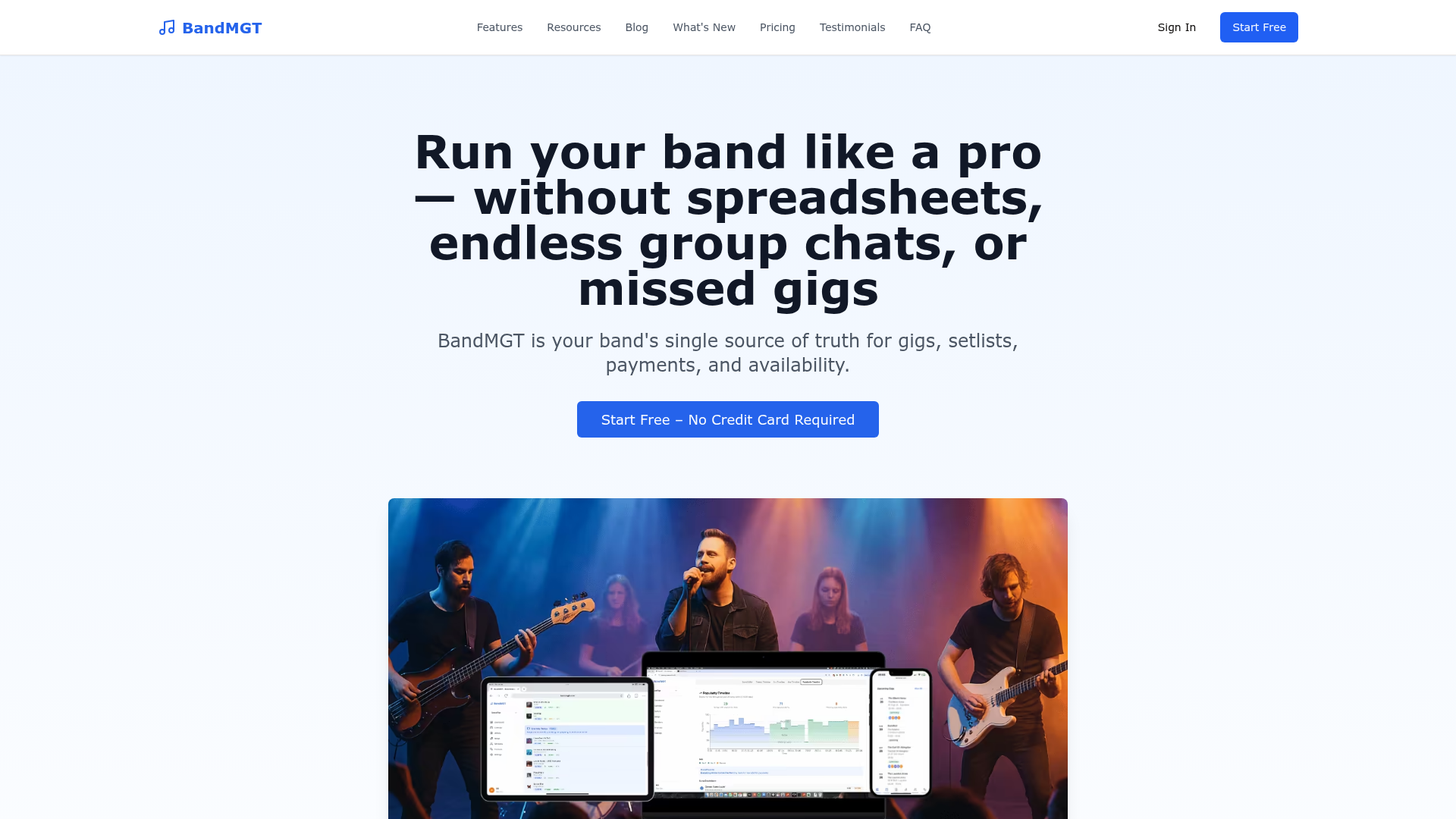
BandMGT is a modern all-in-one platform made specifically for working bands instead of general teams. It brings scheduling, setlists, gig planning, finances, venue details, and internal coordination together in one mobile-friendly system. That usually makes things easier for bands that are tired of bouncing between chat apps, spreadsheets, shared notes, and calendar tools just to stay organized. Rather than juggling all of that, they can handle their workflow in one place. It is especially useful for groups that play often and need a clear view of rehearsals, shows, payments, contacts, and song planning from a single dashboard.
Core Features
- Shared calendar for gigs, rehearsals, member blackout dates, and related planning
- Setlist builder with drag-and-drop organization
- Song analytics with BPM, key, genre, popularity, and last played data
- Venue management with contact details and reminders
- Finance tracking for income, fees, and band payments
- Task management for admin follow-ups and show prep
- Role-based permissions for bandleaders, managers, members, and others involved
Pros
- Built for real band workflows: It is designed around the kind of work bands actually deal with each week, from rehearsals to venue follow-ups, instead of feeling like generic team admin software.
- Strong scheduling tools: Shared calendars and blackout dates help catch clashes early, which can save a band from expensive problems like double-booked gigs or missing players.
- Useful setlist planning: Data such as key, tempo, and recent usage helps make it easier to build a live set that moves more naturally from one song to the next.
- Finance visibility: Payment tracking helps cut down the usual confusion around what the band earned, which fees were deducted, and what each member should receive.
- Clean all-in-one setup: Operations stay in one place, so bands do not have to patch together separate apps for calendars, notes, and payment tracking.
Who It’s For
BandMGT is a strong fit for cover bands, wedding bands, corporate function acts, touring groups, musical directors, and independent artists who need more structure. It tends to work especially well for bands that are busy enough to feel the pressure of scattered admin but still want something simple and practical on mobile. For groups dealing with a lot of moving parts, it will often feel more useful than trying to piece everything together on their own.
Unique Value Proposition
What makes BandMGT stand out is how closely it stays tied to the day-to-day needs of gigging bands. Some tools lean mostly toward booking, while others focus more on performance features or end up feeling like generic project software with a music label added on top. BandMGT keeps the focus on event planning, setlists, member availability, song insights, venue records, and finance tracking. In many cases, that helps bands work in a more organized and professional way without getting stuck in something overly complicated.
Real World Use Case
Take a six-piece function band playing weddings every weekend while also trying to manage weekday rehearsals and substitute players. That kind of schedule usually brings a flood of messages. With BandMGT, the bandleader can log each event, track who is unavailable, build a set around tempo and key changes, store venue notes, and keep payment records clear. The result is less time spent chasing updates and more time focused on getting ready for the actual show.
Pricing: Free plan available; paid tiers may offer expanded features
Website: https://bandmgt.com/
For more insights on how BandMGT simplifies workflows, see Free band management app.
2. SetBook
At a Glance
SetBook is a mobile app for bands, built for gigging musicians who want scheduling, setlists, collaboration, pay tracking, and other show details in one place. It’s probably most useful for bands that need to manage show prep from the first invite all the way to the actual performance on stage. Pretty practical, honestly. Based on how it’s presented, SetBook stays focused on the full gig process, with tools for charts, song libraries, RSVP-style coordination, and earnings tracking. It seems made for real day-to-day band use, not for a huge tour company setup or wide enterprise tour operations.
Core Features
- Gig scheduling
- Setlist creation and organization
- Charts and song library storage
- Collaboration tools for members
- Invites and RSVP tracking
- Earnings and pay tracking
- Mobile-friendly access
Pros
- Gig-focused workflow: A good fit for bands that organize their week around upcoming shows and rehearsals.
- Setlist support: Helpful when the goal is to keep songs, charts, and running orders together in one place.
- Member coordination: Invites and responses can reduce the usual message chasing and cut down on back and forth, which most bands will probably appreciate.
- Useful for working musicians: Earnings tracking adds practical value for active bands that need to keep track of what each show pays.
Cons
- Less complete for tour operations: It may not go as deep into broader tour management workflows, especially for bigger multi-stop planning.
- Venue management appears lighter: Bands that want stronger CRM-style venue records, like contact history or more detailed notes, may need something else.
- Pricing is not clearly confirmed: Public pricing was not clearly verified from the available source material.
Who It’s For
SetBook is best suited to gigging bands and musicians who want a simple mobile way to manage setlists, member coordination, and show-related admin. It’s a solid option for groups that care most about the performance workflow. Simple as that, really. Bands that need deeper operational layers, such as complex venue CRM or task systems, may want something more robust and likely more detailed.
Unique Value Proposition
SetBook’s main appeal is how closely it matches the needs of active performers. It doesn’t come across like a repurposed team app, which often makes a real difference for bands trying to keep prep straightforward. It stays centered on the practical cycle of booking a show, preparing songs, sharing materials, confirming people, and logging pay. That direct approach usually makes it appealing for bands that want fewer moving parts and a setup that stays close to actual gig prep.
Pricing: Public pricing not clearly confirmed
Website: https://www.set-book.com/
3. Back On Stage
At a Glance
Back On Stage presents itself as a platform for bandleaders and entertainment businesses. It goes far beyond basic scheduling, covering bookings, contracts, payroll, calendars, and broader band operations, which is likely where much of its appeal comes from. So this is not just a tool for dates and reminders. It works on web, iOS, and Android, and that is especially useful for teams that need mobile access while traveling. Overall, its messaging leans more toward operations and admin than lighter tools built mainly around setlists, and that difference will often matter depending on how the band actually works.
Core Features
- Booking management
- Contracts and paperwork support
- Payroll and payment tools
- Calendar and gig syncing
- Band management features
- Web, iOS, and Android access
- Operational admin support
Pros
- Broad admin coverage: Helpful for bands that run more like a serious business.
- Good for bandleaders: A strong fit for the person handling logistics, not just the musicians.
- Cross-platform access: Useful for teams working across different devices.
- Contract and payroll support: Good for acts with more formal booking workflows.
Cons
- Can feel heavy for small bands: Simpler groups probably will not need this much operational structure.
- Less setlist-centered: Bands that want deeper song planning tools may prefer something else.
- Pricing is not clearly confirmed: Public pricing was not clearly verified from available source material.
Who It’s For
Back On Stage fits bandleaders, managers, and larger working acts that need stronger operational control. For groups where the biggest challenges are contracts, payroll, and detailed business admin, along with rehearsals and gigs, it looks worth considering. The overall feel is pretty practical. Smaller bands, though, may see it as more system than they really need and possibly more than they would actually use.
Unique Value Proposition
Its biggest strength seems to be the business side. Back On Stage looks built for leaders who want one place for bookings, admin, schedules, and payments rather than just musical planning. In many cases, that makes it a strong option for bands playing frequent events, using subcontracted players, or working through more formal client-facing workflows. If that side of band life is what needs organizing, it usually makes more sense than a tool focused mostly on songs and setlists.
Pricing: Public pricing not clearly confirmed
Website: https://backonstageapp.com/
4. Stage Portal
At a Glance
Stage Portal is made for gigging bands that need help staying organized behind the scenes while also managing venue-facing tasks. What stands out most is the way bands and venues share information, which can make show prep feel smoother and cut down on the constant back-and-forth that usually takes more time than expected. The platform seems focused on complete gig management, with more attention on booking coordination and venue communication than on deeper rehearsal planning or very detailed repertoire tools. For bands mainly trying to keep shows, contacts, and venue details together in one place, it likely does that job well.
Core Features
- Gig management
- Band organization tools
- Venue connection workflows
- Show coordination support
- End-to-end management for gigging bands
- Mobile-friendly access
- Trial availability
Pros
- Venue workflow angle: Helpful for bands working with lots of venues and needing smoother handoffs.
- Good for active gig schedules: Keeps the focus on practical coordination around live shows.
- Useful operational visibility: Keeps show details organized in one place.
- Trial available: A 30-day trial makes it easier to try it before committing, which is always helpful.
Cons
- Less rehearsal-first: Bands focused on song libraries and detailed setlist planning may want more.
- May be venue-centric for some users: Some groups probably will not need that much focus on venue workflows.
- Full public pricing is unclear: Only the trial was clearly identified from the available source material.
Who It’s For
Stage Portal is a good fit for gigging and touring bands handling a steady stream of venues and wanting cleaner event coordination. If venue communication and show logistics are the parts that create the most stress, it could be a smart choice. It seems especially useful for bands juggling frequent shows, venue contacts, and scheduling details at the same time. Bands that want deeper setlist analytics may lean more toward a repertoire-focused tool instead.
Unique Value Proposition
What mainly sets this platform apart is how it connects the band side and the venue side of a gig. That matters because many live show issues tend to happen during the handoff stage, where smaller details often slip through. Documents can go out of date, schedules may stay unclear, and contact information can end up scattered across different places. Stage Portal is designed to reduce that friction by keeping shared show information more connected and easier to manage.
Pricing: Free 30-day trial; full pricing not clearly confirmed
Website: https://www.stageportal.gg/
For a deeper look at venue management workflows, check out CRM for Bands: Mastering Venue Management in 2025.
How these apps compare in real life
If you want to choose quickly, it usually helps to sort these tools by the problem they actually fix. BandMGT is probably the strongest all-around option for bands that want one place for scheduling, setlists, finances, venue info, and tasks, which covers a lot. SetBook is a better fit for gig-focused groups that mostly need setlists and coordination. It stays fairly focused. Back On Stage is aimed more at formal operations and admin work, so it is less about the everyday band chatter. Stage Portal is aimed more directly at venue workflow.
| Company | Key Features | Pros | Cons | Pricing |
|---|---|---|---|---|
| BandMGT | Scheduling, blackout dates, setlists, song analytics, venue management, finance tracking, tasks | All-in-one workflow, easy coordination, strong setlist planning, finance visibility, mobile-friendly | None | Free plan available; paid tiers from $8/m |
| SetBook | Gig scheduling, setlists, charts, song library, invites, RSVPs, earnings tracking | Great for gig prep, useful collaboration, pay tracking, performance-focused | May be lighter on tour operations and venue CRM; pricing unclear | From $18/m for a band |
| Back On Stage | Bookings, contracts, payroll, calendar syncing, operational management, web and mobile apps | Strong business admin, cross-platform, good for bandleaders, broad workflow coverage | Can feel heavy for smaller groups; lighter setlist focus; pricing unclear | From $40/m |
| Stage Portal | Gig management, band organization, venue workflows, show coordination, mobile access | Helpful venue coordination, good live-event focus, trial available | Less rehearsal and setlist depth; may feel venue-centric; pricing unclear | Free 30-day trial; full pricing not clearly confirmed |
For many readers, the main choice is still pretty simple: do you want a narrower specialized workflow, or one central system for the whole band? If a band is tired of juggling chats, PDFs, spreadsheets, and calendar invites, the all-in-one approach usually works better over time. Training everyone once is also easier than having to fix missed details again and again before rehearsals, gigs, or weekly planning. That practical difference usually shows up fast when small things start slipping.
Why an all-in-one band management app saves so much time
Bands often don’t realize how much time and energy get lost through small admin mix-ups. A wrong date in the group chat, an outdated setlist PDF, or a payment note buried in email can each seem small on their own. But when they stack up, they create stress, waste time, and can make the band look less professional, which honestly happens pretty often.
That is where a good band mobile app comes in. It gives everyone one place to check the same information instead of digging through chats and inboxes. Shared calendars usually help reduce scheduling clashes. Blackout dates are especially helpful when members play in more than one project. Venue records keep contact details from getting lost in old messages. Finance tools can make those after-gig conversations less awkward, like working out who covered travel or how the fee should be split. A solid setlist manager also helps the band walk on stage feeling more ready, with songs, notes, and running order all in one place.
That is why tools made for musicians often work better for this job than general apps like Trello, Notion, Google Calendar, or WhatsApp. Those apps can still be useful, and lots of bands already rely on them. But they were not built around load-in times, last-played songs, member substitutions, or split payments.
Stop running your band through five different apps
If your band is still juggling gigs in one app, setlists somewhere else, payments in a spreadsheet, and reminders buried in a chat thread, you already know how messy that gets. The more shows you play, the more that kind of setup usually starts taking up time and attention, and that adds up fast.
What makes BandMGT different is that it gives working bands one organized place for scheduling, setlists, finances, venue details, and tasks. One place. In this view, it is not just for storing information. It helps everyone stay on the same page before rehearsals, on show day, and after the gig, when payments, venue notes, and follow-ups still need to be handled instead of slipping through the cracks.
For bands, managers, musical directors, and anyone who wants a cleaner system without building their own workaround stack, it can feel like the kind of upgrade that pays off fast by cutting stress. Simple usually matters here, and that seems like a big part of the appeal. If making band scheduling and day-to-day operations easier sounds useful, visit https://bandmgt.com/ and see how it works with your workflow.
Additionally, you may enjoy reading Band organisation and management for New Year success for related planning tips.
Frequently Asked Questions
What should I look for in a band mobile app?
Start with the basics: shared scheduling, availability tracking, setlist tools, mobile access, and simple communication. If your band plays regularly, it also helps to have venue management, payment tracking, and task reminders so admin does not live in five different places.
Is a band scheduling app really better than Google Calendar and WhatsApp?
For casual use, Google Calendar and WhatsApp can work. But once your band is juggling rehearsals, gigs, substitutes, venue notes, and payments, a dedicated band mobile app is usually much better because it keeps everything connected instead of spread across separate tools.
How much does a band management app usually cost?
Pricing varies a lot. Some tools offer free plans or trials, while others use monthly subscriptions based on features or team size. If pricing is not public, it is worth booking a demo or checking the official pricing page before committing.
Which bands benefit most from using a band management app?
Working cover bands, wedding bands, touring acts, church teams, function bands, and artist support groups usually get the most value. The more moving parts you have, the more helpful it is to use a central tool instead of patching together general apps.
How do I know if BandMGT is the right fit for my group?
If your biggest issues are scheduling confusion, scattered setlists, unclear payments, and missing venue details, BandMGT is a strong option to consider because it brings those core workflows together. It makes the most sense for bands that want an all-in-one system rather than a tool that only solves one part of the problem.
How long does it take to see results after switching to a new band management app?
Most bands feel the benefit within the first few weeks, especially once all members begin using the shared calendar and event details consistently. With a platform like BandMGT, the biggest early wins are usually fewer scheduling mix-ups, faster setlist updates, and less time spent chasing people for answers.